


“'What if' is such a powerful question.": A Conversation with Ruben Reyes Jr. on Archive of Unknown Universes

Updated: Jan 26

Archive of Unknown Universes by Ruben Reyes Jr. | ISBN: 9780063336315 | Pub date: July 01, 2025 | Mariner Books | Pages: 288
“Truthfully, it didn't matter what the device might tell her. The future would be winding and perilous, no matter which fork she followed. Ana would have to live with her choices.”—Ruben Reyes Jr., Archive of Unknown Universes
In his first novel, Ruben Reyes Jr. writes about the Salvadoran Civil War from the perspectives of revolutionaries and their children. But in this world, Defractors, devices which reveal scenes from the viewer’s alternate futures, complicate the stories by revealing to both the characters and to the reader the generational impacts of war, trauma, and societal oppression.
Brittany Torres Rivera (BTR): Your first book, There Is a Rio Grande in Heaven, is a collection of short stories. Can you talk about how you approached the editorial process with Archive of Unknown Universes, and how similar or different that was from working on your debut? Did anything surprise you?
Ruben Reyes Jr. (RRJ): Writing a novel was very, very hard! With a short story, you can sort of power through a first draft and then revise it. It’s much harder to do that with a novel. So, writing a novel took a lot more patience. The hardest editorial task was figuring out the right structure. The final structure didn’t come until very late in the editorial process, once I’d been working on the novel with my editor. Nothing was too surprising. In general, I find that somewhere, deep in the back of my head, I know what revisions need to be done. The struggle is listening to that impulse, and making the time to make those revisions, even when they’re difficult or time consuming. That was very much the hardest part of the editorial process.
BTR: How did you come up with the Defractor? Why not something more straightforward, like a machine that shows the future? How does the multiplicity of futures tie in with key themes in the novel, such as the rupture and instability of revolution?RRJ: I wanted a technology that was believable, but wasn’t too powerful. A device that told the future would be too helpful to the characters. Instead, the Defractor allows characters to project their own insecurities and wishes onto the device, without getting anything tangible or practical information in return. It made for more tension in the novel. “What if” is such a powerful question, whether you’re applying it to the personal or the structural, both of which were at play during the Salvadoran Civil War. At the edge of a revolution or war, there’s a sense of possibility, I have to imagine.
BTR: Luis, Domingo, and Ana all have to pry and wonder about their parents’ experiences which, whether for research or self-identity, they feel is a missing piece of their lives. Why do you think the parents are so intent on keeping their pasts a mystery? Why is one generation intent on burying the past while the next is intent on uncovering and understanding it?
RRJ: Before I wrote the novel, I read an article by the sociologist Leisy Abrego that basically argued that because the Salvadoran Civil War was economically and politically denied by the United States, migrants began to deny or underplay the trauma they’d gone through. That’s partially at play for Luis, Domingo, and Ana’s parents. I don’t blame them either—it’s painful to talk about some of the worst things you’ve experienced. But as a young person, I remember wanting to know more about where I came from, and as I became an adult, I became so curious about my parents’ young adulthood. Both parties—those wanting to know, and those who find it difficult to speak of the past—have completely valid points of view, and this makes for some intergenerational conflict. It felt true to life, but was also good for a novel about the long-term effects of trauma.
BTR: The novel opens on Ana and Luis’s relationship, but in another universe, it's Ana and Domingo. Are all the realities as real as the rest?
RRJ: Personally, I don’t think it’s helpful to think of alternate universes or “what-could-have-been,” though I completely understand the allure. Given the chance, I’d probably use the Defractor! But they’re not as real as our world. In the novel, though, they could be as real as our world. That made the Domingo parts so interesting to write—I needed them to feel, to a reader, as real as the world where the Civil War played out as it did in our universe.
BTR: When it comes to history, does the first story we're told become the only one we can believe?
RRJ: The first version of history we learn is powerful, simply because it’s the first, but there’s definitely ways to complicate the established narrative. That’s why I find revisionist histories, or the contribution of people who’ve been erased or marginalized in the archive, so exciting.
BTR: At the end of the novel, Luis, who is resistant to using or relying on Defractors, says “That’s all life is. One decision, then another.” Do you think there is value in reflecting or imagining alternate realities? What purpose (if any) could that serve?
RRJ: That’s a central question of the novel, and not one that I’m sure I’ve made my mind up about. I don’t think I completely agree with Luis’s conclusion that life is boiled down to the individual decisions we make. Thinking about alternate realities, or roads not taken, can help someone redirect their life. If they’re not happy with the life they’ve taken, they might take actions that could get them on a path they wished they’d gotten on earlier. So, in that way, it could be helpful, though I can also imagine thousands of ways it could paralyze or lead to fruitless overthinking.

Ruben Reyes Jr. is the son of two Salvadoran immigrants. He is a graduate of Harvard College and the Iowa Writers' Workshop. His debut story collection, There is a Rio Grande in Heaven, was a finalist for The Story Prize and longlisted for the the PEN/Faulkner Award for Fiction and other awards. His writing has appeared in The New York Times, The Boston Globe, The Washington Post, and other publications. In 2026, he was named a Forbes 30 under 30. Archive of Unknown Universes is his first novel. Originally from Southern California, he lives in Queens.
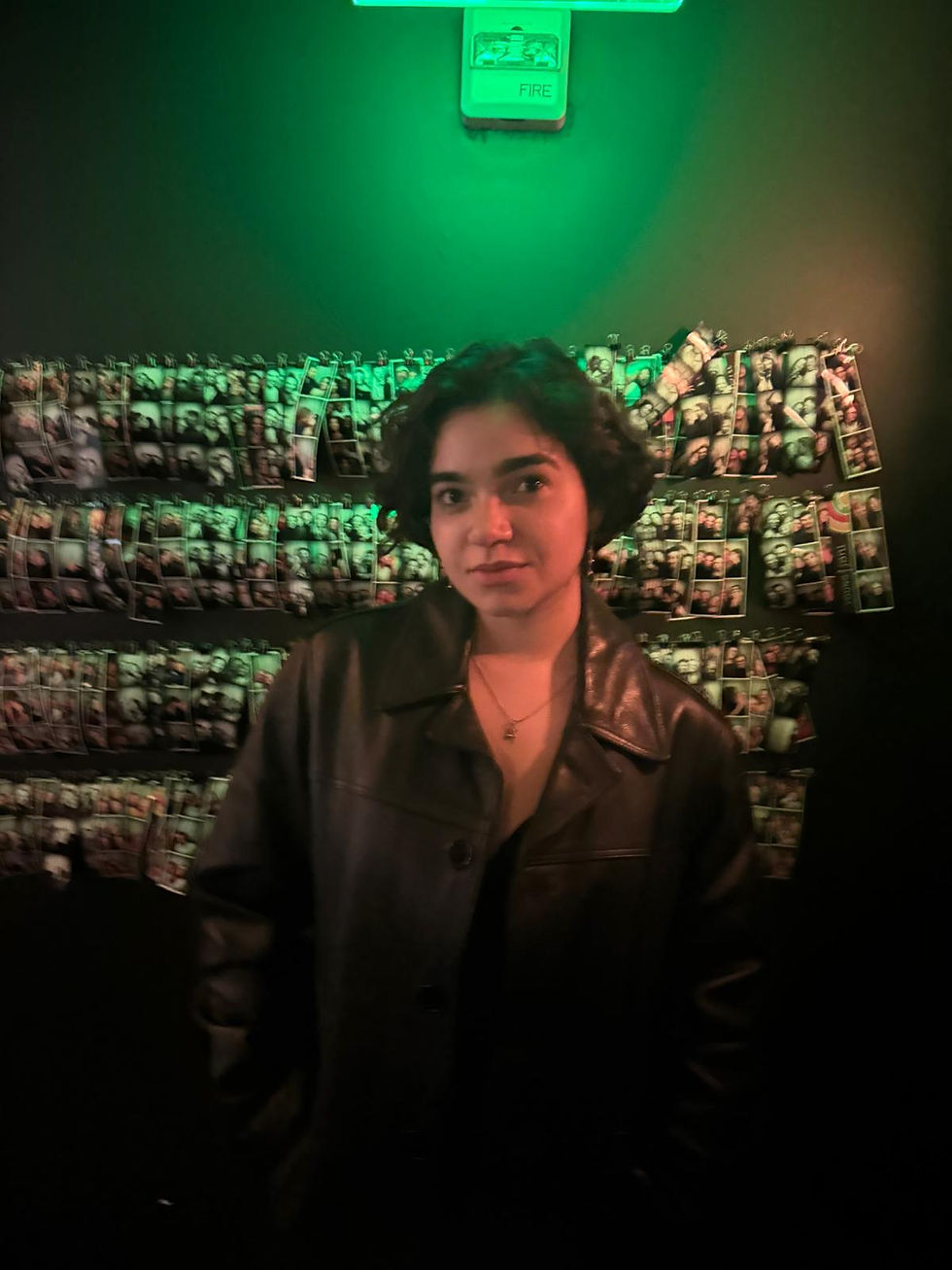
Brittany Torres Rivera is a bilingual editor and writer. An alumna of the Fulbright Program, she is a contributing editor for Letras Latinas Blog 2. Born in Puerto Rico and raised in Florida, she is based in Minneapolis, Minnesota, where she is the assistant editor at Graywolf Press. At Graywolf, Torres Rivera works on poetry, fiction, and nonfiction titles, and is especially involved in works in translation from the Spanish.


