


The ecopoetics of exile in Aleida Rodríguez's The Garden of Exile and “The Glass Cage”

According to Steel Wagstaff, ecopoetics is "an amalgam of two Greek words: oikos [household or family] and poïesis [making, creating, or producing], so that ecopoetics quite literally means the creation of a dwelling place, or home-making.” In The Song of the Earth, Jonathan Bate defines ecopoetics as a critical practice in which the central tasks are to ask “in what respects a poem may be a making … of the dwelling-place” and to “think about what it might mean to dwell upon the earth.” Aleida Rodríguez’s debut poetry collection The Garden of Exile joins this tradition through what I will refer to as an ecopoetics of exile.
In the Spring of 2025, Aleida Rodríguez was invited by the Creative Writing program at the University of Notre Dame for a reading to celebrate the launch of the 59th issue of the Notre Dame Review, which features some of her poems. I had the honor of introducing her before a tornado alert forced us to move the reading to the basement. It was an unforgettable night, followed by a stimulating conversation over lunch with her and Francisco Aragón the next day. I was left with the desire to continue studying her poetics and legacy in Latinx poetry, which led to the expansion of my introduction into this essay.
Garden of Exile
I slow-dripped this debut collection, Garden of Exile, on a visit to Los Angeles, where Rodríguez eventually settled when her parents caught up with her from Cuba, five years after being airlifted out as a minor during Operation Pedro Pan in 1962. In “My Mother’s Art,” Rodríguez describes her mother painting scenes of LA in a dream. City Hall is described as “poking up like a giant Radiograph pen / behind some low yellow buildings / on which the sun burned fiercely.” The Ambassador Hotel has a “withered glamour” and a “faded façade.” These descriptions landed with particular vividness as they matched many of the scenes that passed through the windows of the buses and trains that took me all around the city that week.
Even when Rodríguez evokes childhood memories of Cuba, of houses with tiled floors and archways and Catholic effigies, these memories are not of a “pure,” “untouched” Cuba. They are memories mixed with the specter of her absence that stayed behind as the only version of her that her family had access to in those long years of separation. That absence haunts the poet as she looks back, but not in a tormented way:
Though my mother pulled me toward her with one arm, she scooped up only watery absence; my body
had long since drifted downriver. My mother’s face in this photograph, captured by a stranger, betrays
the weight of emptiness in her arms. “(My Mother in Two Photographs, Among other Things”, prose
poem)
The voice in this poem isn’t afraid of opening the photo album of memory; it relishes in the tastes, smells, and textures despite the familiar company of the exile wound. The prose poem ends with “A vision of her older daughter […] her body a blade sharpened to sever the question from the answer, her face a glossy ad of the ideal American living room.” The poet leaves Cuba, but Cuba doesn’t leave her as she lives out her life in the US. The US has also found its way into her memories of Cuba. For the poet, one doesn’t exist without the other.
Each sequence in the collection is held together by the gravitational force of the atmospheric section titles, so I was not surprised when I learned at our lunch that in addition to being a painter, Rodríguez was a theater kid. It’s not just her attention to “setting the scene” that can be attributed to her knowledge of drama: each poem builds up and releases dramatic tension through the content of its musings, its rhythm, and its pulse. The last section is entitled “The Garden,” and it is where the ecopoetic stance is spelled out, albeit in subtle, evocative language. “The Return,” one of the most stunning poems in the collection, establishes the Earth (embodied by the garden) as the ultimate mother and homeland:
Though I have lived in exile for thirty years,
I am led through a gauntlet of caresses,
become a canal for the memory of moisture
I am not an orphan, they remind me,
(…)
I have no language to offer them
but the one the brain perpetrates as language.
yet my body, my peasant body, surrenders faithfully
to the wordless love of the grasses.
Without pronouncing the word mother, the negation of orphanhood, the “gauntlet of caresses” and the “canal for the memory of moisture” all act as potent symbols for the communion with a nurturing caretaker that is our primordial home. This faithful surrender to “the wordless love of the grasses” establishes a connection between mother, home/land, a non-language (akin to pre-language?) state, memory, and the Earth. Rodríguez evokes these things by invoking their absence / opposite: although she has lived in exile (she has a homeland), she is not an orphan (she has a mother), she has no language to offer (she has a peasant body).
The final poem of the collection, “The Invisible Body,” makes it clear that even in the garden, absence and longing are a site of worship, a gravitational center. The invisible body is “created out of your longing, your longing compressing invisible molecules into an absence you recognize.” The poet reiterates the paradox that longing and absence are the creative fuel and fire of her poetry, as an invisible but active presence:
Every contour of your body not filled by you is molded
by the attentiveness of the invisible body, whose breath surrounds you.
It’s more than prayer it wants –more than language, with its
conditions.
The invisible body demands you invent new senses to receive it
This invention is poetry. And when the pressure of language pushes down too hard, there is “the wordless love of the grasses.”
Poetry is perhaps one of the arts most generatively permeable by other arts and disciplines, and Rodríguez expertly wields this potential. This attention to place, through the lens of the exile wound haunted by absences, is part of Rodríguez’s ecopoetic exploration: a search for home through language and place/the Earth.
The Glass Cage
Karla Maravilla’s oral history interview with Aleida Rodríguez led me to the last piece of the puzzle of my reflection (I encourage you to watch it as Karla asks fantastic questions and Rodríguez gifts us with unique insights into her work). It led me to “The Glass Cage,” published in the influential collection Sleeping with One Eye Open: Women Writers and the Art of Survival (edited by Marilyn Kallet and Judith Ortiz Cofer, and published by University of Georgia Press in 1999), which confirmed many intuitions I had about Rodríguez’s politics and poetics after our meeting.
The conceit of the glass cage is a striking image that captures the sensation of hypervisibility (exposure) to the exoticizing, fetishistic white gaze (that can of course be embodied by people of all skin colors and backgrounds, including Mestizo Latinos, Chicanos, and well-meaning people on the Left of the political spectrum, as Rodríguez points out) experienced by many people who fall into one or more subcategories of the subaltern. Rodríguez calls poetry that instrumentalizes politics to deny the importance of depth or artistic merit “flatly reactionary.” Instead, she says “I find the subtleties of politics personally conveyed to be much more radical in their specificity, their ability to get under the skin –infinitely more delicate than the broad brush of polemics.”
In other words, it’s not that her poetry isn’t political, but she leans into the personal, the specific, and the subtle as a political strategy to create a more honest and deeper connection to the reader. This is highlighted by her use of the phrase “under the skin,” in ways that are “delicate” as opposed to “broad brush” strokes deemed the “natural” mode of expression for those she is “ghettoed in” with in the glass cage of Latina, Cuban exile, woman, and lesbian (among others).
Rodríguez criticizes the writers who jump at the opportunity to “dance from inside the glass cage”:
they contaminate the well for those of us whose concerns are more formal and spiritual, for whom it’s a dedication to a craft we love as deeply as we can with a devotion to its needs and nuances, like
something alive we have been entrusted with, and not a blunt instrument
Delicacy and subtlety in form have been naturalized as superfluous and “inauthentic” for those who carry the burden of identity labels and can’t simply be “poet” or “artist” instead of “Latina poet,” “lesbian poet,” etc.
Although this is a situation I have personally experienced, reading this made me realize that, on first impulse, Rodríguez’s Cuban exile poems and the aspects of her identity that are more “exotic” or “polemical” did take precedence over other aspects of her work. It is clear in how I start the essay: I couldn’t get past the first sentence of my review of the collection without evoking the image of being airlifted out of Cuba. Although it’s not the central focus of the piece, I still couldn’t resist the temptation to start with that, to establish it as an unforgettable presence that will accompany our journey into the poet’s world.
Rodríguez refuses to be “relegated to a ghetto of experience and ideas by people who would keep me exiled and wounded in my work because that position seems more authentic to them”. The fact that her poems reflect on her story but also delve into other subject matters such as painting and fairy tales and formal experimentations should not be considered strange or “out of character” and certainly not be the subject of a criticism around “authenticity,” but sadly many today would still benefit from understanding the arguments in her essay. As a Latina woman writing in the US, I found myself relating to her experience of being pigeonholed and feeling the pressure to lean into the most “exotic,” i.e. “marketable” sides of myself, despite “having it easier” for a number of reasons. “The Glass Cage” contains key lessons for navigating the turbulent political waters of today and protecting our “mental territory and right to follow our whims”, as Rodríguez puts it.
Rodríguez defines politics as “any action against annihilation –even when I’m addressing a hummingbird in my backyard or the sunlight coming through my front window,” and this is a profoundly ecopoetic stance. In his introduction to a collection on ecopoetry and water, Forrest Gander writes that “whereas 'nature poetry' often takes for its themes the so-called 'natural world' as though it were separate from the human world, ecopoetry asks how we are involved in—and a part of—all that surrounds us”. That Rodríguez frames a conversation with a hummingbird as political makes it clear that she doesn’t see the natural world as a separate dimension to be studied through an anthropocentric lens: this is ecopoetry, not nature poetry. Rodríguez meets her own criteria of a political writer: a person who “regardless of sex, sexual orientation, class, nationality, race, religious beliefs, or even subject matter –alters me on a molecular level with the fire of his or her vision expressed in precise language.”
“Can I consider myself an exile if I am “at home” in nature?” she asks near the end of her essay. This question encompasses what the Garden of Exile is at its core: a sensuous celebration that doesn’t shy away from the anger and grief of exile but doesn’t get stuck there either. Solitude in the garden is the “wordless world” the poet seeks respite in from not only the tangled webs of language, but from all the heaviness of the human marks on the world.

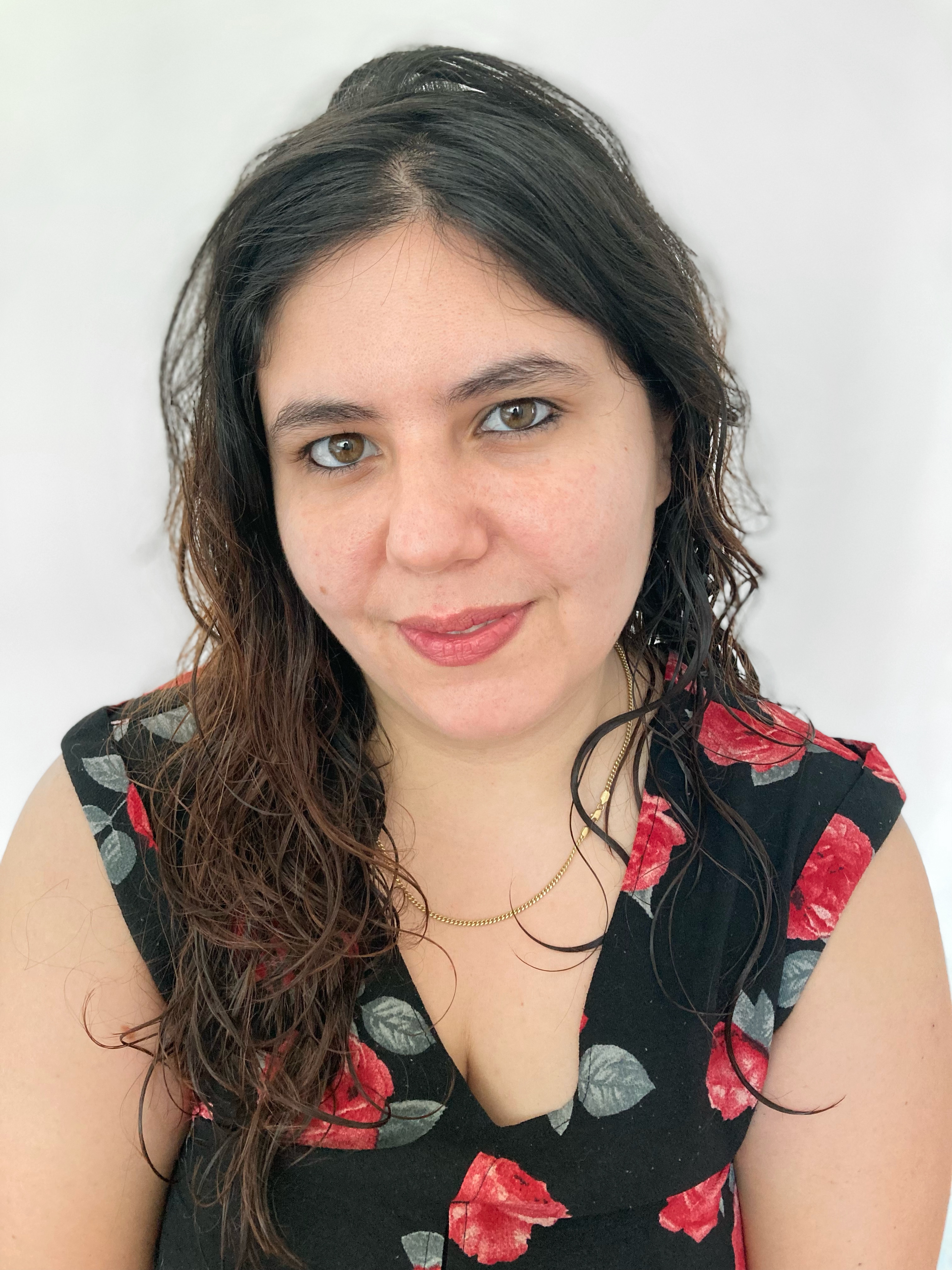
Adriana Toledano Kolteniuk is a writer from Mexico City who spent her formative years in the US and has been a bilingual, bi-cultural bridge-builder since. She obtained her degree in English Literature from UNAM and then spent 8 years in Chiapas, where she (re)discovered her passion for wild nature, community building, and social justice. She considers herself an ecofeminist thinker who creates verbal-affective ecosystems from a queer, neurodivergent, anti-colonial lens. Adriana is a recipient of the Fulbright-García Robles Grant for Mexican citizens to pursue postgraduate studies in the US.


